
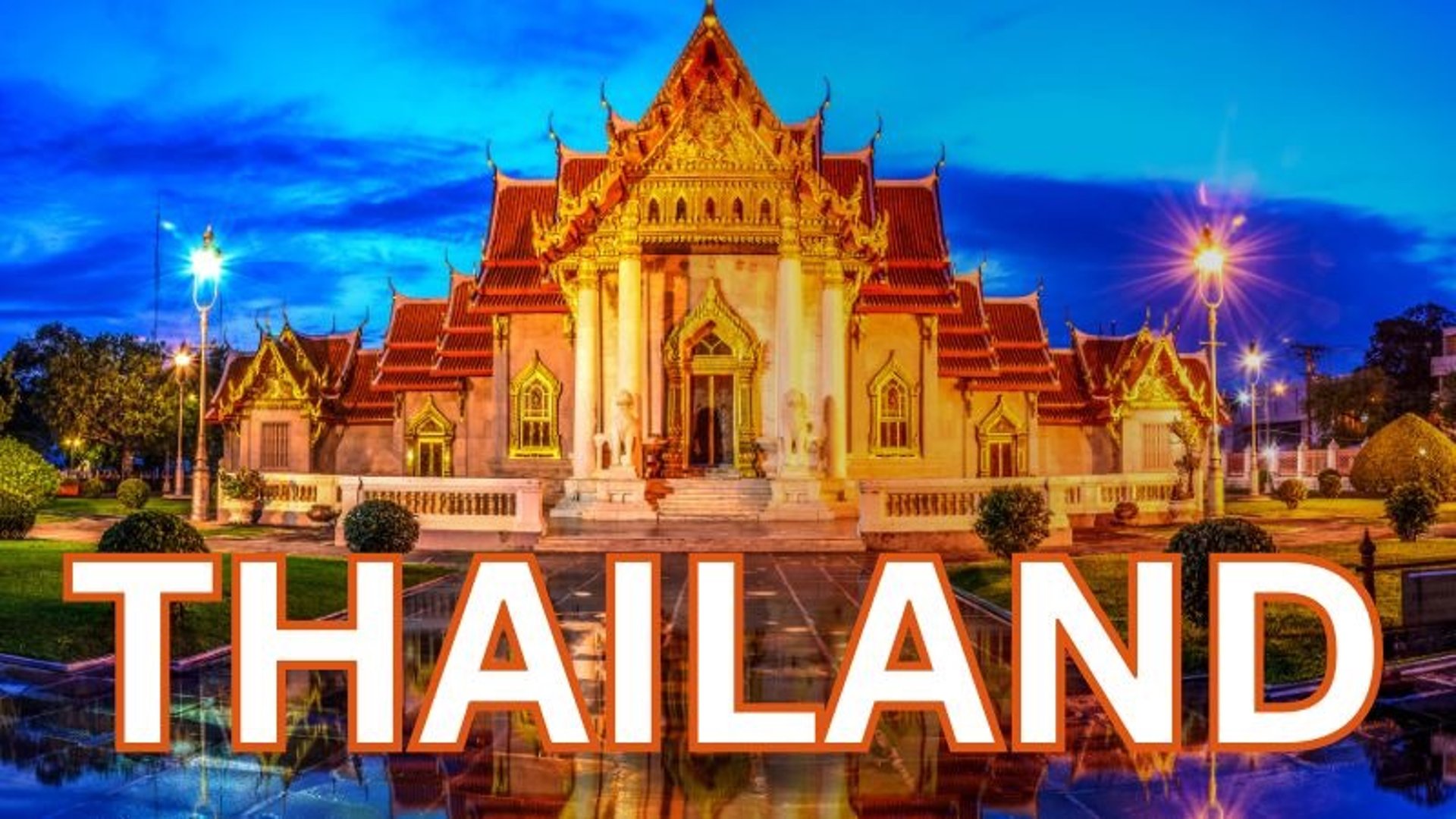
Retire in Thailand: Best Cities, Costs, Healthcare & Lifestyle
Are you planning to retire in Thailand, or perhaps just live here long-term? I hope this article will be helpful. If you are wondering which western populations are most drawn to retiring in Thailand, here are the top five nationalities: 21% British; 14% American; 13% German; 8% Australian; and 6% French. Perhaps the biggest group, however, is from Asia, specifically China. This is due to the proximity and Chinese fears over the over-reach of their government as seen in past Chinese policies during Covid. Okay, let's explore Thailand, both the practical and the intangible aspects that make up life there.
Thailand has a way of slowly getting under your skin. At first it’s a vacation: a few nights in Bangkok, a beach or two, maybe a temple or three. Then you find yourself wondering what it would be like to wake up here every day—shopping in local markets, learning a few Thai phrases, having a regular café, knowing which noodle stall does your favorite bowl just right.
For many foreigners, that curiosity grows into something bigger: a plan to spend part of the year here, or to retire in Thailand altogether. The reasons are straightforward. The cost of living stretches pensions and savings much further than in the West. Healthcare is modern and much more affordable. Daily life is easy and often delightful. And from one country you can choose so many different lifestyles: slick high-rise living in Bangkok, temple-filled streets and mountains in Chiang Mai, classic seaside life in Hua Hin, or quiet provincial cities in the northeast.
In this guide, we’ll walk through Thailand’s most appealing cities and regions for long-stay visitors and retirees—Bangkok, Chiang Mai, Phuket, Pattaya, Hua Hin, Koh Samui, Khon Kaen, Udon Thani, and Lampang. For each, you’ll get a sense of what life feels like there, along with practical details: housing costs, healthcare options, transportation, and the pros and cons that matter when you’re thinking beyond a two-week vacation.
We’ll finish with the nuts and bolts of staying longer: retirement visas, healthcare costs, and how to decide where, exactly, in Thailand you might want to land.
Why Thailand Appeals to Expats & Retirees
Thailand has been on the radar of expats, digital nomads, and retirees for decades—and not by accident. It offers a blend of things that are very hard to find in one place: low costs, high comfort, warm weather, modern healthcare, rich culture, and a population that, by and large, doesn’t just tolerate foreigners, but genuinely seems to enjoy having them around.
Cost of Living in Thailand
The cost of living is one of the biggest reasons people choose to retire in Thailand. Exactly how far your money goes depends on where you live and how you like to live, but compared to North America, Europe, or Australia, the numbers can feel almost unreal.
Everyday expenses often look something like this:
Local meal at a food court or market: 50–90 THB ($1.40–$2.50 USD)
Mid-range restaurant meal: 150–300 THB ($4–$8 USD)
Taxi or Grab ride across town: usually 80–150 THB ($2–$4 USD)
Mobile phone plan with data: 200–350 THB ($6–$10 USD) per month
Housekeeper (per hour): 150–200 THB ($4–$6 USD)
90 minute Thai massage: 300-600 THB ($10-$20 USD)
Housing is the big variable: a modern condo in central Bangkok will cost more than a house in Udon Thani or Lampang, but in either case, you’re getting far more for your money than you likely would at home.
RETIRED GLOBAL LIFE COST OF LIVING VIDEOS




Cultural Atmosphere & Everyday Life
Thailand’s culture shows up in small, daily ways: the wai greeting with hands pressed together; the monk walking barefoot through morning streets; the offering of flowers at a tiny spirit house outside a family shop. At the same time, you’ll find malls, coffee chains, cinemas, and supermarkets that feel very familiar if you’ve lived in the West.
Daily life tends to follow the sun and the heat. Mornings are good for errands and markets; afternoons for cafés, home, or the mall; evenings for street food, night markets, and cool breezes.
Safety
Thailand is generally safe for foreigners. Petty theft can happen, especially in tourist areas, but violent crime against expats is relatively rare. Even petty theft seems rare. I've left my cell phone twice in a restaurant or store (yes, I'm very absent minded!) and each time when I remember where I last had it, it is always waiting for me, even hours later.
Most long-stay foreigners feel comfortable walking in their neighborhoods, riding public transport, and going out at night in busy areas. I feel safer in Thailand cities than in comparative-sized cities in California. By far, actually. This is not just my gut feeling, but based on statistics I've read as well, particularly comparing Thailand to the US, and the last country I lived in long-term, France.
In my home city of Chiang Mai, I am often out late at night, maybe returning from a jazz concert, or a late dinner or just out with friends, and never feel threatened, even walking down narrow sois (small streets). The same is true when I visit other cities, like Chiang Rai, Krabi, Koh Samui, Hua Hin... It is even true in Bangkok, although I do tend to be a little more cautious in "the big city" and stick to more public areas at night. But caution is always wise, especially when alone and at night, and especially so if you are a woman. That's sadly just life in the world today. The one area where Thailand is more dangerous is on the roads, whether walking or driving or riding a motorcycle. I'd rate them as high risk, actually. But regarding crime, I consider Thailand the safest country I've ever lived in or visited.
Healthcare Quality
Healthcare is one of Thailand’s biggest strengths. Private hospitals in major cities are clean, modern, and often feel more like hotels than clinics. Many are internationally accredited, and English is widely spoken by doctors and specialists.
Later in this guide we’ll talk about specific hospitals in each city, but at a national level, these names often come up among expats:
Bumrungrad International Hospital (Bangkok)
Samitivej Sukhumvit Hospital (Bangkok)
Bangkok Hospital (multiple locations nationwide)
Chiang Mai Ram Hospital (Chiang Mai)
Bangkok Hospital Phuket (Phuket)
For routine visits, many people simply pay out of pocket. For bigger events, international or regional health insurance can cover the gap—and still cost far less than healthcare back home.
Although medical care in Thailand is very high quality and low cost (compared to the USA anyway), a reality that older people moving to Thailand need to think about is health insurance. Yes, you can get health insurance in Thailand, but there will be issues like the fact your pre-existing conditions will likely not be covered.
And it can be tricky because there are some super, super inexpensive medical insurance policies in Thailand that are really not designed for true quality coverage, rather just meeting the requirement of some Thai retiree visas. Most expats opt for a quality (not bargain-basement) plan and save money by only getting in-patient coverage (since out-patient care is so inexpensive), and with a high deductible. They see it as insurance against the "big stuff."
SIDE NOTE: If you want to live overseas and want complete coverage like you'd get in your home country, there are actually some countries with easy visas and low living costs that let you live there AND qualify for their universal healthcare. In some countries it is even free to foreign residents just as it is to that country's citizens. These countries are in Europe and Central/South America. Sadly, there are none in Southeastern Asia. (Another way to get a foreign country's universal healthcare is to be employed by a business within that country. Almost every country grants their universal healthcare to foreign workers legally employed. The problem, however, is that most countries make it very difficult for foreigners to legally work within their country.)
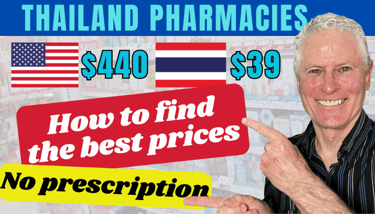
You can get a lot of information about Thailand doctors and hospitals, pharmacies and medications, and medical insurance in the videos below.
RETIRED GLOBAL LIFE HEALTHCARE VIDEOS






Dating in Thailand and the Sex Industry
It is no secret that Thailand has a reputation, and I don't just mean for great beaches and delicious food. Yes, it is the sex industry. Thailand is actually quite a country of contrasts in this area. On the one hand, there is a very open sex industry - regions in each major city (particularly Pattaya and Bangkok) where sex is openly marketed. But outside these regions, Thailand is a conservative Buddhist country. Women actually dress a bit more conservatively than in many western countries and public displays of affection are rarely seen in public.
Prostitution is technically illegal in Thailand, but those laws are typically ignored. As a practical matter, Thailand seems to believe, "Do what you want, unless it is against someone else's wishes." As a result, there is a sharp contrast in sex-industry neighborhoods where anything goes, and the rest of Thailand where more conservative behavior is the norm.
There is also a lot of sexual fluidity in Thailand. There are actually three genders: men, women and kathoey (ladyboy). A kathoey/ladyboy is a man who identifies as a woman, usually getting breast implants and other changes to be more female, while keeping their male genitalia.
A misconception is that ladyboys exist mainly in the sex industry. Nothing could be further than the truth. Yes, there are plenty of ladyboys catering to that desire, but the vast majority are just part of the regular population in Thailand. Unlike the western image of a man in drag, Thai ladyboys can appear as quite beautiful women. You might think what a beautiful woman your bank teller is, or your real estate agent showing you condos, when in fact she is a ladyboy. My point is they are just a regular and very accepted part of Thai culture without the stigma that exists in the west. Same-sex preferences are also quite respected in Thailand, without the battle they have had to go through in the west in their quest for equality.
As far as traditional dating goes, it is not unusual to see western men with Thai women. And yes, sometimes there is a significant age difference between them. Part of the mutual attraction is Thai women often find western men attractive, and western men feel the same way about Asian women. Thai women are often attracted to the more educated and worldly nature of western men, have more financial stability and less of a likelihood to cheat on them (as Thai men have the reputation of cheating on their wives). Western men are often attracted to Thai women due to the fact they are often younger, and tend to have more of a husband-centric mentality than many men feel they can find with some western women. [These are not necessarily truths, but perceptions are different for everyone.]
Popular dating sites in Thailand are ThaiCupid.com and ThaiFriendly.com, although there are dozens of smaller ones. Beware, however, these dating sites are also used by freelancers looking for customers, and these women are not always clear about their intentions. But it is usually pretty easy to spot what a woman's goals are. If her photos just feature her in a tiny bikini and lingerie, that is a pretty big indication of a freelancer. The same big hint is there if you are 65 and the woman sending you her profile is 22. Let's be real about it. But hey, if that is what each one wants, fine. But don't get confused and think it is true romance.
Joy and I have done several videos on this subject that will help explain this complex world in Thailand, and how to navigate it.




Climate
Thailand is tropical, which means warm to hot and generally humid, but not in exactly the same way everywhere. Northern cities like Chiang Mai and Lampang can have pleasantly cool evenings in the winter (November, December, January) and less heat and humidity than in Bangkok and the south. Southern islands like Phuket and Koh Samui are still hot but offer sea breezes and beach days.
If you’re dreaming of four seasons and autumn leaves, you won’t find them here. But if your ideal weather is “no snow, no ice, no heavy coats,” Thailand delivers.

Okay, let's explore Thailand city-by-city...
Bangkok
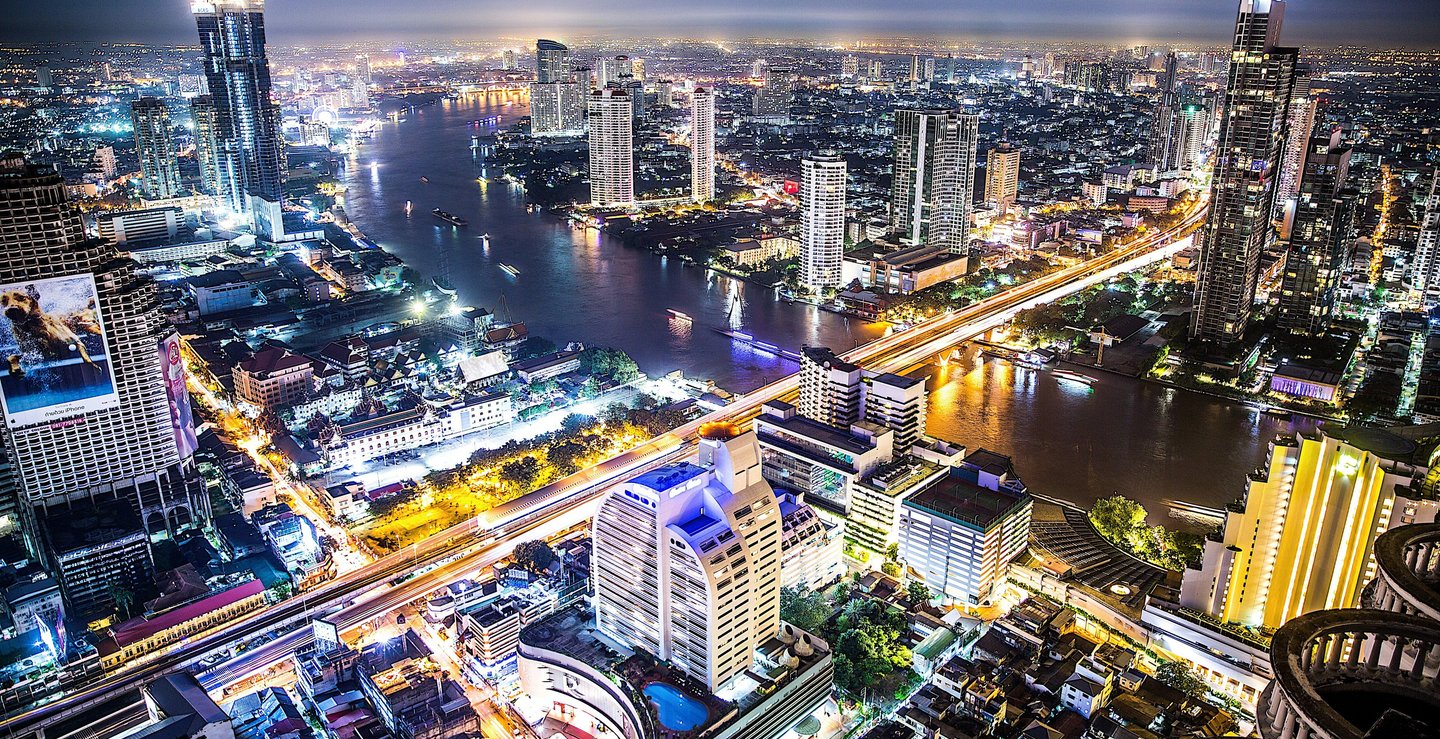
Bangkok is Thailand’s beating heart: big, busy, modern, and endlessly layered. On one corner, you’ll see a gilded shrine covered in marigolds; across the street, a 40-story condo with a rooftop pool; around the corner, a lane of street vendors frying noodles and stirring iced coffee in metal tumblers.
For many expats and retirees, Bangkok is one of the easiest big cities in Asia to live in. The transit system works. Condos are built for comfort—pools, gyms, security, sometimes even saunas and gardens. There are cafés, co-working spaces, parks, temples, and every kind of restaurant you can imagine.
Weather & Climate
Bangkok is hot and humid most of the year, with temperatures typically between 28–35°C (82–95°F). The hot season runs roughly March through May, the rainy season from June through October, and the coolest, driest months are November through February. It’s never chilly, but the combination of shade, air-conditioning, and rain showers makes it manageable.
Cost of Living & Housing in Bangkok
Bangkok is Thailand’s most expensive city, but even here, most retirees find their budget goes significantly further than it would at home. You can choose between small but modern studios, mid-range condos with great amenities, or high-end units with skyline views and hotel-style services.
Basic 1-BR condo outside central zones: 10,000–18,000 THB ($280–$510 USD)
Mid-range 1–2 BR condo in popular expat areas: 20,000–35,000 THB ($560–$980 USD)
High-end or luxury condo near Sukhumvit/Sathorn: 40,000–80,000 THB ($1,120–$2,240 USD)
Daily expenses—food, transport, utilities—will depend on how often you cook at home versus eat out, and whether you lean toward local markets or imported goods and restaurant meals. Either way, most people considering a move or planning to retire in Thailand are pleasantly surprised by how manageable Bangkok can be.
Best Neighborhoods for Expats
Bangkok isn’t one city so much as a collection of overlapping neighborhoods, each with its own personality. Where you choose to live determines how you experience the city day to day.
Sukhumvit (Asok, Phrom Phong, Thonglor): Densely urban, highly walkable, full of malls, cafés, restaurants, and expat services. Great if you like city life and want everything within a short walk or train ride.
Sathorn: More business-like, with embassies, offices, and upscale condos. Quieter at night than Sukhumvit but still central and convenient.
Ari: A stylish, slightly more local-feeling area with cafés, tree-lined streets, and a younger expat crowd.
Phra Khanong / On Nut: Further along the BTS line, more affordable, and popular with long-stay foreigners mixing local and expat life.
Riverside: Scenic, with high-end condos and hotels overlooking the Chao Phraya. Lovely if you value views and don’t mind higher prices.
Transportation
Bangkok’s transit is one of the reasons it works so well for long-term living. If you choose a neighborhood near the BTS Skytrain or MRT subway, you can get around most of the city quickly and comfortably without owning a car.
BTS Skytrain & MRT Subway: Clean, efficient, and air-conditioned—essential for crossing long distances without sitting in traffic.
Airport Rail Link: Quick connection between central Bangkok and the main international airport.
Chao Phraya River ferries: Scenic, practical routes for riverside neighborhoods and old-town sightseeing.
Grab and taxis: Inexpensive and widely available, though traffic can make journeys slow at peak times.
Since Bangkok is the central travel point of Thailand, let's talk about their two huge airports:
Suvarnabhumi (BKK) is the newest and largest. It is the hub for most international flights. It is pronounced nothing like it looks: Suwanaboom.
Don Mueang Airport (DMK)(pronounced: Don Mung) is the main hub for flights within Thailand as well as some of the discount air carrier international flights.


Lifestyle & Food
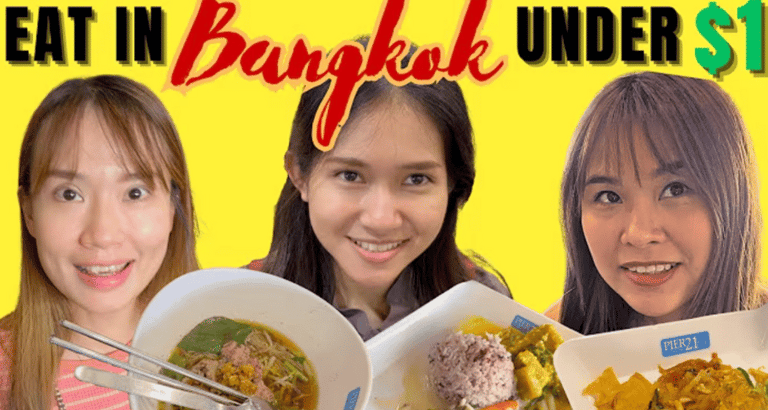
Bangkok can be as local or as international as you want it to be. You can eat a bowl of boat noodles at a street stall for a dollar, then later that week have a multi-course tasting menu at a rooftop restaurant with a view over the whole city. You can spend your mornings in cafés or co-working spaces, your afternoons in parks or malls, and your evenings exploring night markets or listening to live music.
Culture is everywhere: glittering temples like Wat Arun and Wat Pho, Chinese shrines tucked into alleyways, museums, galleries, and old neighborhoods where time has slowed down just enough to notice the details.
Healthcare in Bangkok
Bangkok has Thailand’s strongest concentration of private hospitals, many of which are considered among the best in Asia. This is one of the key reasons some retirees choose to base themselves here instead of on the islands or in smaller cities.
Bumrungrad International Hospital: A flagship medical tourism hospital, with a reputation for high standards and English-speaking staff.
Samitivej Sukhumvit Hospital: Long popular with expats and families, with an emphasis on international care.
Bangkok Hospital: A large private network with advanced diagnostics and many specialists.
BNH Hospital: A long-established hospital often used by expats in central Bangkok.
Routine appointments are often surprisingly affordable. For more serious procedures, expats usually combine Thailand’s relatively lower costs with private insurance for peace of mind.
Pros of Bangkok
World-class private hospitals and specialists
Modern condos with pools, gyms, and security
Excellent transit system (BTS, MRT, airport connection)
Endless variety of food, shopping, and entertainment
Large, active expat and retiree communities
Beautiful parks (Lumpini, Benjakitti, Rama IV and of course the "Green Lung" of Bangkok, Bang Kachao, and museums (MOCA and Bangkok National Museum)


Cons of Bangkok
Traffic congestion, especially at peak hours
Humid heat year-round, with very hot months
Higher housing and living costs than elsewhere in Thailand
Air quality can be an issue during certain periods
Chiang Mai
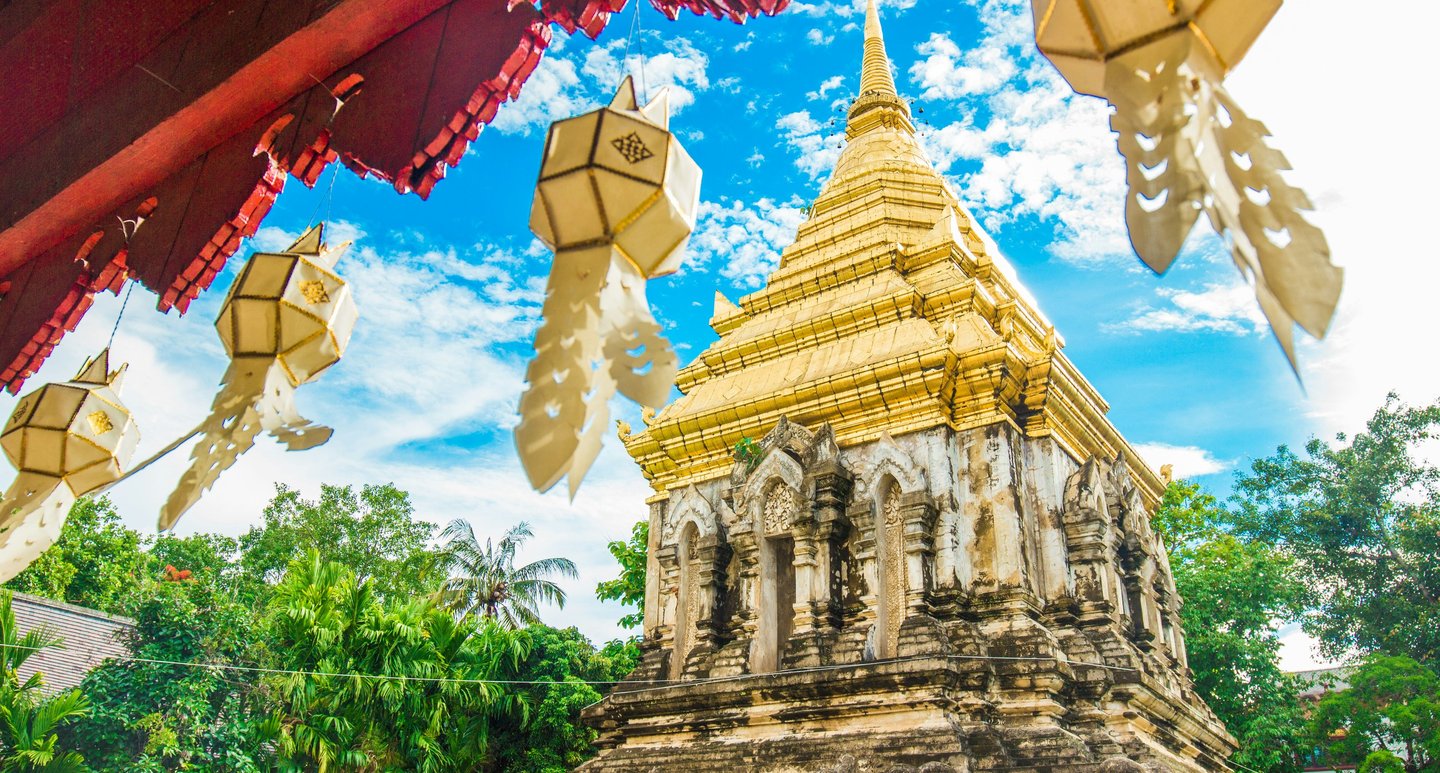
Chiang Mai sits in a broad valley in northern Thailand, surrounded by forested hills and ringed with small villages and mountain roads. It’s a city where the old and new live very comfortably together: centuries-old temples and moats alongside co-working spaces, espresso bars, and design shops.
For many foreigners who decide to retire in Thailand, Chiang Mai is the first serious contender. It’s more relaxed and walkable than Bangkok, less tourist-driven than some of the islands, and considerably cheaper than the big coastal resorts. Yet it still offers good hospitals, modern condos, and a thriving expat and digital nomad community.


Let us show you
our home town!


Temples & Cultural Heritage
Chiang Mai’s temples (wats) are part of its everyday fabric. There are more than 300 of them—some simple neighborhood wat compounds where locals come to pray, others grand and famous, filled with visitors and pilgrims.
Wat Phra That Doi Suthep: The iconic hilltop temple overlooking the city, reached by a winding mountain road and a long staircase flanked by naga serpents.
Wat Chedi Luang: A partly ruined Lanna-era chedi in the Old City, atmospheric at sunset.
Wat Phra Singh: Also in the Old City, an extensive wat known for its classic northern Thai architecture and revered Buddha image.
Wat Umong: A forest monastery with tunnel shrines, shaded ponds, and a quietly contemplative atmosphere.
Wat Pha Lat: My personal favorite. A hillside temple accessible via a 30 hike on Monk's Trail. (You can also choose to drive there.) A stream runs through it ending in a waterfall. There are extensive grounds, many of the buildings in beautiful ruins. I've featured it in several videos.
Weather & Climate
Chiang Mai has three main seasons: hot, rainy, and cool. From November to February, the weather can be lovely—mild days and cooler evenings, when you might reach for a light jacket. March and April are hotter, and the rainy season brings afternoon showers that wash the city clean.
Cost of Living & Housing in Chiang Mai
One of Chiang Mai’s strongest attractions is just how far your money goes here. Compared to Bangkok, Phuket, or many Western cities, rent and daily expenses are refreshingly reasonable.
Basic apartment or studio: 7,000–12,000 THB ($200–$340 USD)
Mid-range condo in a good location: 12,000–20,000 THB ($340–$560 USD)
Higher-end condo or larger unit: 22,000–40,000 THB ($620–$1,120 USD)


Groceries and eating out are also very affordable. If you enjoy local markets and simple Thai food, your monthly costs can be surprisingly low. If you prefer imported goods and frequent Western restaurants, your budget will climb—but still remain modest by Western standards.
Best Neighborhoods
Chiang Mai is compact enough that you can get across town fairly quickly, but its neighborhoods still have distinctive personalities. Choosing the right one shapes your experience of the city.
Nimmanhaemin (Nimman): Trendy and lively, full of cafés, co-working spaces, boutiques, and modern condos. Popular with digital nomads and younger expats.
Old City: The square, moat-ringed historic center, with temples, guesthouses, cafés, and narrow streets. Atmosphere-rich, and very walkable.
Chang Phueak: North of the Old City, a mix of local life, markets, and small guesthouses, with easy access to Doi Suthep.
Hang Dong and outskirts: Quieter suburban and semi-rural areas with houses, gardens, and a slower pace of life.
Transportation
Chiang Mai doesn’t have trains or a subway system, but it’s small enough that getting around isn’t difficult, especially if you live in or near the areas you use most.
Grab and Bolt: Very common and inexpensive for rides within the city.
Red trucks (songthaews): Shared taxis that run on semi-fixed routes or can be hired privately.
Scooters: Widely used by locals and expats alike for short trips.
Walking and cycling: Pleasant in the Old City and some quieter neighborhoods.
Lifestyle & Food
Life in Chiang Mai often revolves around simple pleasures: a favorite café, a regular market, a weekly temple visit, a weekend drive into the hills. The café culture is particularly strong—there’s no shortage of quiet places to read, write, or work online over a good coffee.
Food ranges from cheap and delicious street stalls to stylish sit-down restaurants. Northern Thai dishes like khao soi (curried noodle soup) and sai ua (herbed sausage) are local specialties, and you’ll also find plenty of vegetarian and vegan options.
Healthcare in Chiang Mai
For a city of its size, Chiang Mai is very well served by private hospitals and clinics, which is an important consideration if you plan to live here long-term or retire in Thailand’s north.
Chiang Mai Ram Hospital: A well-regarded private hospital popular with expats. A new Chiang Mai Ram hospital is currently under construction at a different location (near Bangkok Hospital). It is believed the current (old) one will remain open, giving them two locations.
Bangkok Hospital Chiang Mai: Part of the Bangkok Hospital network, with modern facilities and specialists.
Lanna Hospital: A mid-range private hospital that many locals and foreigners use for routine care.
For routine checkups and minor procedures, costs are often low enough that many people pay out of pocket; for bigger events, private insurance can bridge the gap.
Pros of Chiang Mai
Chiang Mai appeals to people who like culture, community, and a slightly slower pace of life, without giving up modern comforts. It’s as easy to spend your day visiting temples and markets as it is to sit in a café with a laptop and a latte.
Very reasonable cost of living
Rich cultural life and hundreds of temples
Cooler season with pleasantly mild evenings
Friendly, established expat and retiree community
Strong café culture and easy access to nature
Cons of Chiang Mai
Chiang Mai is not perfect. For some, its biggest drawback is seasonal rather than year-round, and for others, it’s simply a matter of personal taste.
Smoky “burning season” (often February–April) can affect air quality
No beaches—trips to the sea require flights or long drives
Limited formal public transit (no metro or train system)
A much smaller adult entertainment scene than Bangkok and Pattaya, if that is your goal.
See all of our Chiang Mai videos!


Phuket
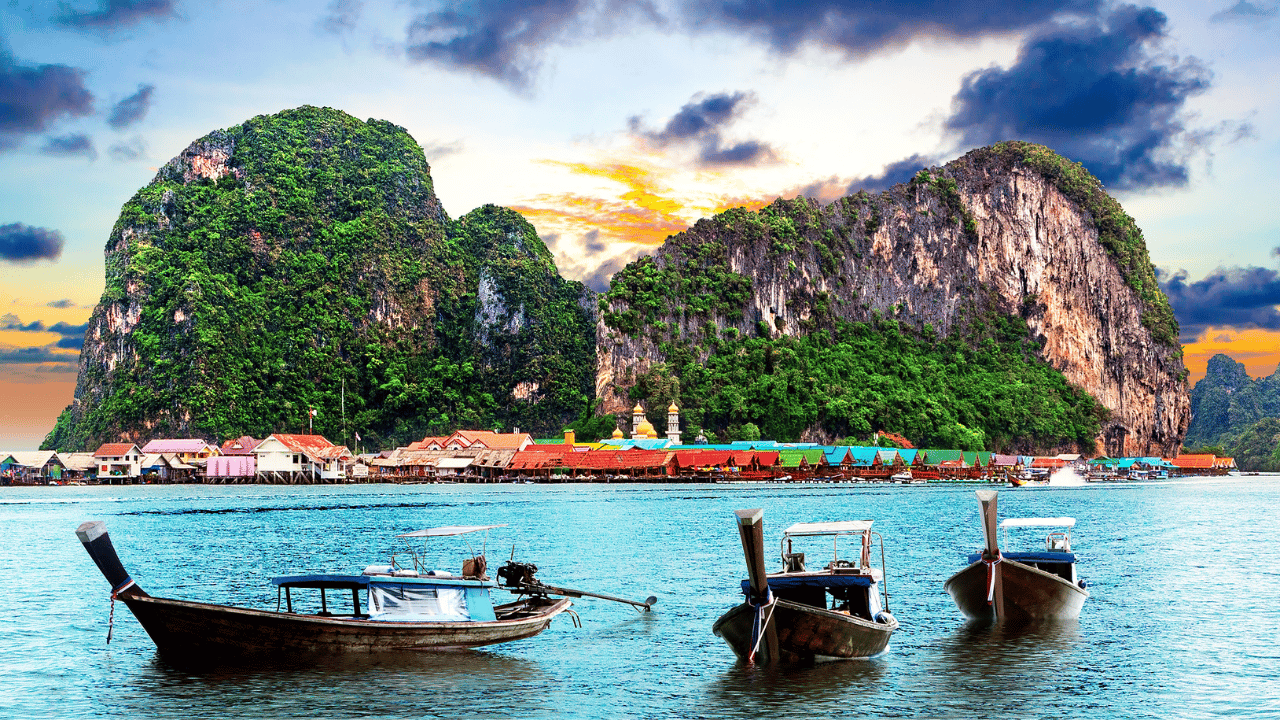
Phuket is Thailand’s island postcard: green hills rolling into white-sand beaches, turquoise bays, and a coastline dotted with coves and cliffs. Yet behind the holiday brochures is a very livable island with modern conveniences, excellent hospitals, international supermarkets, and entire neighborhoods designed around long-stay residents rather than tourists.
Life here tends to follow the rhythm of the ocean. Mornings might mean swimming before the sun gets too hot, afternoons spent in cafés or under a shady veranda, evenings watching the sky turn orange over the water. For many expats and retirees, Phuket offers the comforts of a mini-city wrapped inside the atmosphere of a tropical beach town.
Weather & Climate
Phuket is warm year-round, with breezy dry months from December to April and a rainy season from May to October. Even in monsoon months, showers usually come in bursts rather than all-day downpours, and the island remains lush and green.
Cost of Living & Housing in Phuket
Phuket’s housing varies widely by neighborhood and proximity to the water. Inland, rents can be surprisingly affordable; near the coast, especially in upscale areas like Bang Tao or Surin, expect higher prices and polished developments.
Basic apartment: 12,000–18,000 THB ($340–$510 USD)
Mid-range condo near beach: 18,000–30,000 THB ($510–$840 USD)
Pool villa with garden or sea view: 35,000–70,000 THB ($980–$2,000 USD)
Best Neighborhoods
Kata & Karon: Great beaches, laid-back atmosphere, a strong expat presence, and plenty of cafés and restaurants.
Rawai & Nai Harn: Perhaps the island’s most popular long-stay area, with a balanced mix of amenities, budget and upscale homes, and easy access to some of Phuket’s most beautiful beaches.
Bang Tao / Laguna: An upscale coastal zone with modern condos, villas, golf courses, and a polished international feel.
Patong: Best known for nightlife and entertainment; very convenient but busy.
Transportation
Phuket doesn’t have trains or subways, so most long-term residents use a mix of motorbikes, cars, and ridesharing apps.
Grab: Widely used for short trips.
Motorbikes: Popular and practical in most areas.
Cars: Common among retirees and families; essential for exploring the island.
Lifestyle & Food
Food is one of Phuket’s joys. You can eat local dishes at market stalls, dine at beachside restaurants with your feet in the sand, or try international cuisine prepared by chefs from all over the world. Weekends often revolve around the beach or day trips to nearby islands, and evenings can be as quiet or as lively as you choose.
IN THE PHUKET REGION




Healthcare in Phuket
Bangkok Hospital Phuket – One of the island’s top facilities.
Bangkok Hospital Siriroj – Modern hospital popular among expats.
Dibuk Hospital – Strong, newer option with good specialist care.
Pros of Phuket
Beautiful beaches and scenery
Excellent hospitals for an island
Large and supportive expat community
International restaurants and supermarkets
Cons of Phuket
Higher rental costs in desirable beach areas
Traffic in peak seasons
Tourism-heavy during holidays
Pattaya
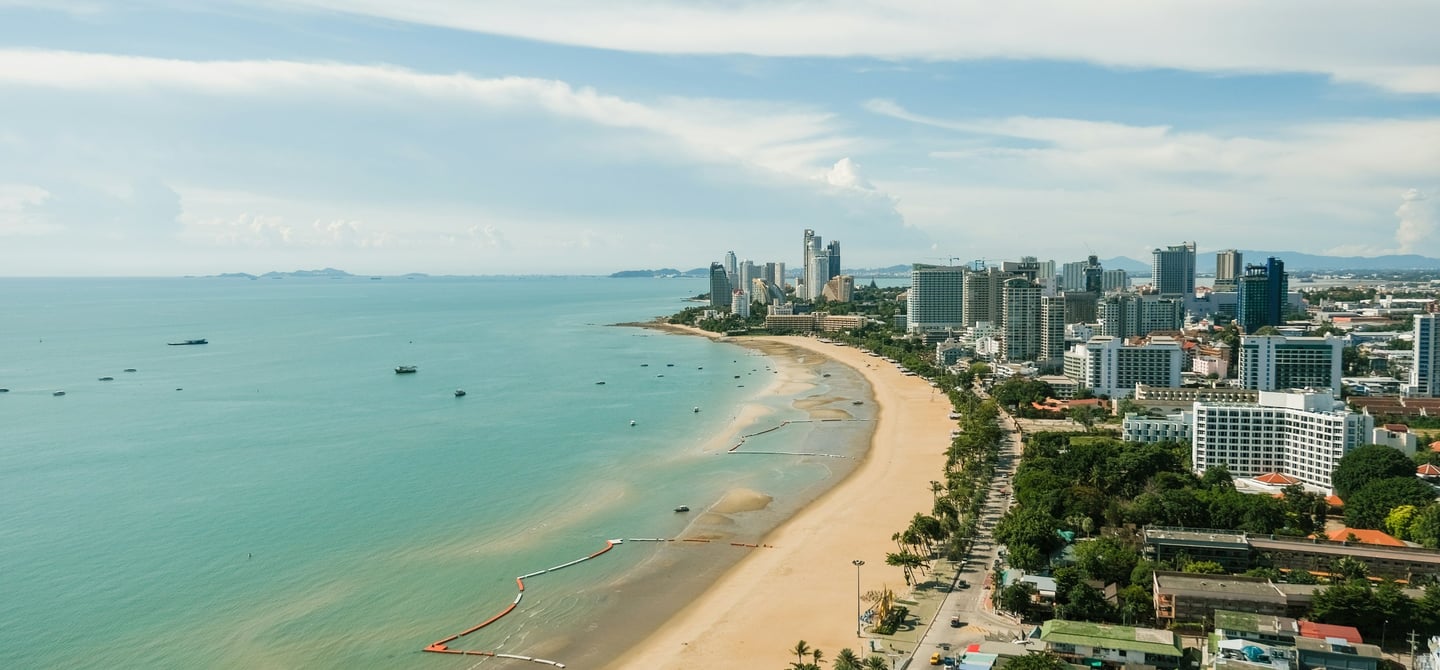
Pattaya is a city that often surprises newcomers. Beyond the nightlife reputation is a place that’s remarkably practical for long-term living: modern condos, good supermarkets, excellent international restaurants, and easy access to Bangkok just 90 minutes away. For many retirees, Pattaya strikes a sweet spot between convenience, comfort, and cost.
The city stretches along a long bay, with a mix of quieter residential neighborhoods, lively beach roads, and calm areas just outside the main center. Whether you want something peaceful or something more social, Pattaya gives you options.
Weather & Climate
Pattaya’s weather is warm and steady, with sea breezes that make even hot days manageable. The rainy season brings short, refreshing downpours rather than long storms.
Cost of Living & Housing in Pattaya
Pattaya offers some of the best rental value along Thailand’s coast, making it especially attractive for retirees.
Basic studio or simple condo: 7,000–12,000 THB ($200–$340 USD)
1–2 BR condo near beach: 12,000–25,000 THB ($340–$700 USD)
Luxury or seaview condo: 28,000–60,000 THB ($780–$1,680 USD)
Best Neighborhoods
Jomtien: A favorite among expats; quieter and cleaner than central Pattaya with a long beach and plenty of cafés.
Pratumnak Hill: Upscale mid-range area with a calm feel and easy access to both Pattaya and Jomtien.
Central Pattaya: Convenient for shopping and dining, best for those who enjoy an energetic atmosphere.
Na Jomtien: A quieter extension of Jomtien with new developments and more space.
Transportation
Pattaya is compact enough that getting around is easy, whether by rideshare, motorbike, or local transport.
Grab and Bolt: Very affordable and widely used.
Songthaews: Cheap, hop-on shared taxis along beach roads.
Motorbikes: Ideal for short trips.
Lifestyle & Food
Life here is social and relaxed. Many retirees gather in cafés, join clubs, or meet friends at beach bars. Pattaya has an impressive range of international restaurants; you can eat Thai food, French pastries, Italian pasta, Indian curries, Japanese sushi, or British pub meals—often all in the same neighborhood.
Healthcare in Pattaya
Bangkok Hospital Pattaya – Highly regarded private hospital.
Pattaya International Hospital – Smaller but reliable.
Queen Sirikit Naval Hospital – Affordable and well-run.
Pros of Pattaya
Excellent value for long-term rentals
Close to Bangkok and its airports
Great food scene
Strong healthcare options
Cons of Pattaya
Certain areas are busy and tourist-heavy
Some beaches are less pristine than those in the south
Hua Hin
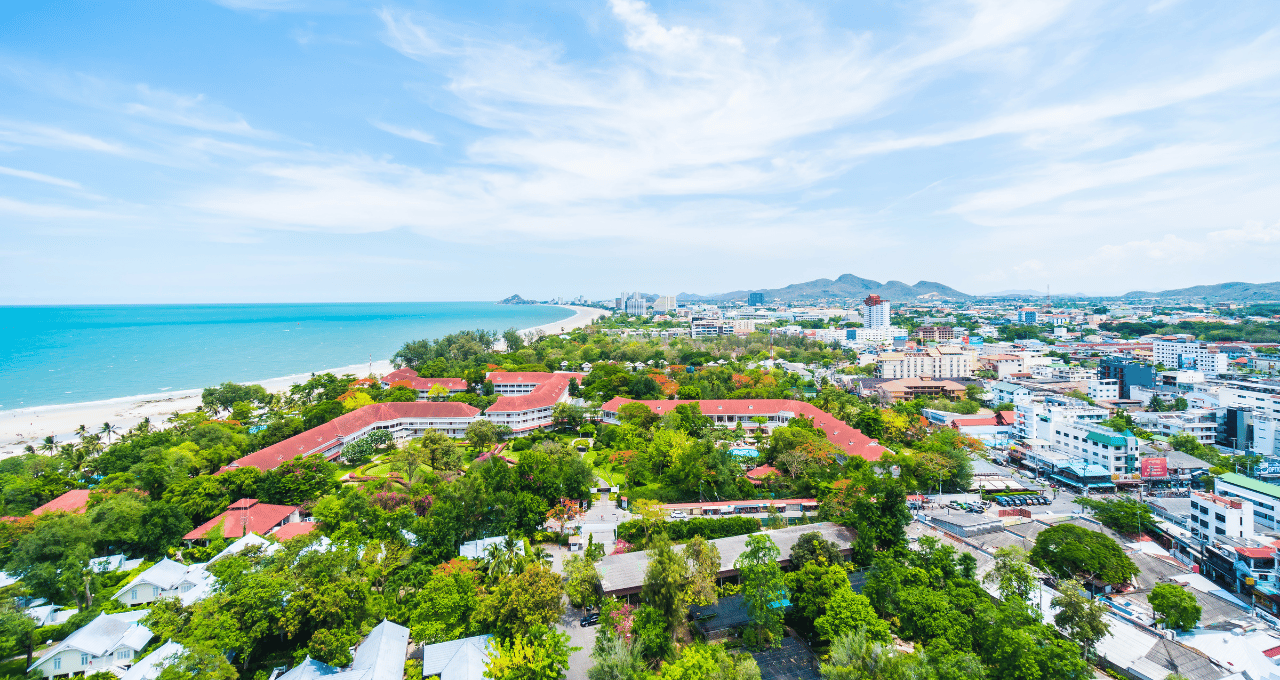
Hua Hin has long been Thailand’s classic seaside retreat, favored by Thai royalty and well-to-do Bangkok families. Today, it remains one of the calmest, most retiree-friendly cities in the country—a place where mornings begin with long beach walks and evenings with cool breezes and open-air markets.
The town is relaxed but well-equipped: modern malls, excellent restaurants, golf courses, and comfortable hospitals. For many retirees, Hua Hin offers the perfect compromise: coastal living without the crowds of tourist-heavy islands.


Weather & Climate
Hua Hin is warm and breezy, with less rainfall than southern Thailand. The sea keeps temperatures pleasant even in hotter months.
Cost of Living & Housing in Hua Hin
Hua Hin offers a wide range of housing, from modern condos near the beach to comfortable pool villas in gated communities a few minutes inland.
Condo near beach: 12,000–25,000 THB ($340–$700 USD)
House in gated estate: 20,000–40,000 THB ($560–$1,120 USD)
Pool villa: 35,000–60,000 THB ($980–$1,680 USD)
Best Neighborhoods
Khao Takiab: A peaceful area near the beach with cafés and small shops.
Hua Hin Centre: Convenient for markets, restaurants, and transport.
Hin Lek Fai: Hillside area with larger homes and mountain views.
Cha-Am: A quieter town north of Hua Hin, popular with long-term foreigners.
Transportation
Hua Hin is manageable by rideshare, taxis, and motorbike. The city is compact enough that most daily needs are within a short ride.
Grab: Widely available.
Local taxis: Common around the center.
Motorbikes: Good for short distances.
Lifestyle & Food
The Hua Hin lifestyle is quiet, outdoorsy, and social in a low-key way. Days revolve around beach walks, golf, markets, and dining out. Seafood is excellent, and the weekly Cicada Market is a favorite for its mix of art, food, and evening entertainment.
Healthcare in Hua Hin
Bangkok Hospital Hua Hin
San Paulo Hospital
Hua Hin Hospital (public)
Pros of Hua Hin
Gentle seaside town with excellent climate
Close to Bangkok
Good hospitals
Relaxed, community-oriented lifestyle
Cons of Hua Hin
Limited nightlife
Koh Samui
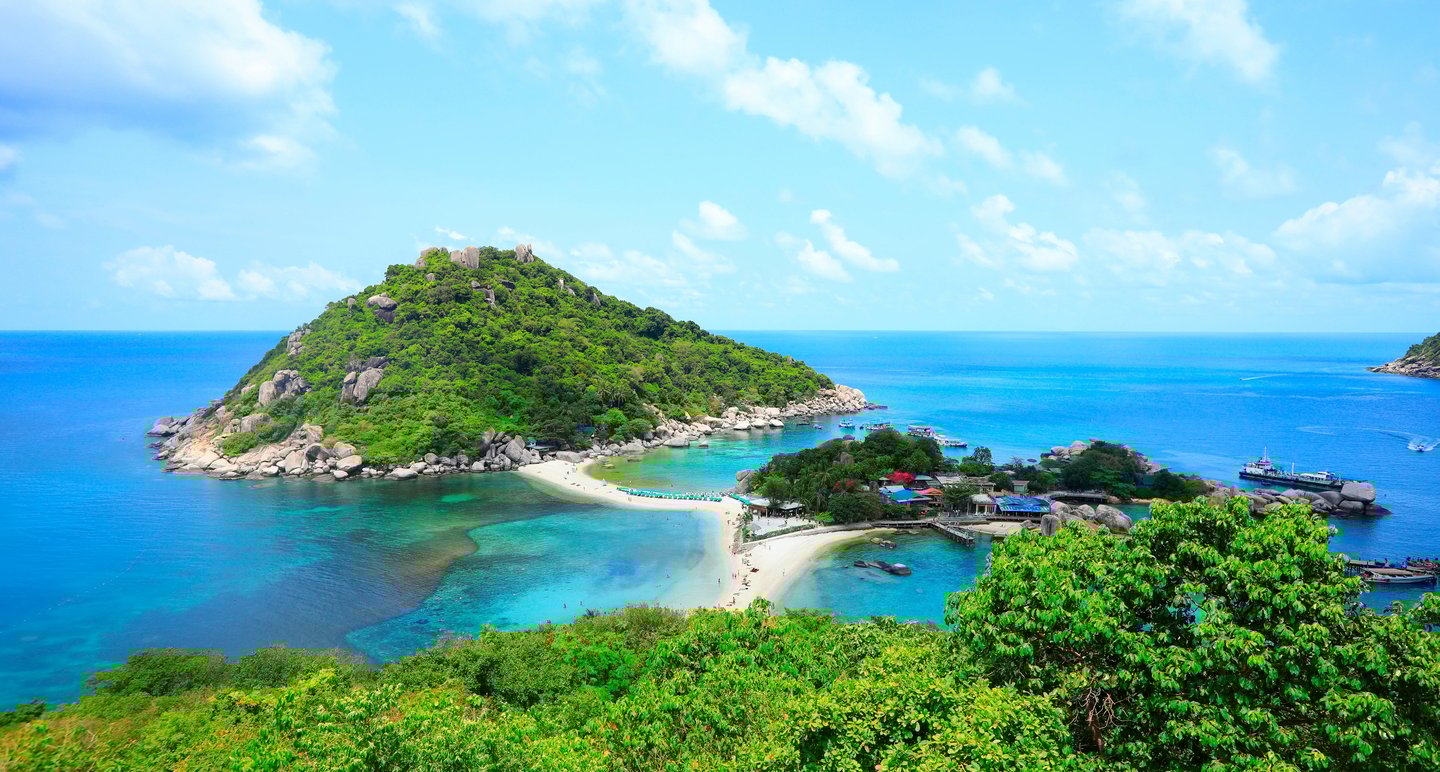
Koh Samui is a quieter, softer island than Phuket—an easygoing mix of palm-fringed beaches, hillside villas, and small villages strung along the coast. It’s the kind of place where days blend together in a pleasant rhythm: coffee overlooking the sea, errands in town, perhaps a swim or walk along the beach in the late afternoon.
It attracts long-stay visitors and retirees who want something peaceful but still comfortable—an island where you can buy groceries in modern stores, access good healthcare, and still feel surrounded by nature.
Weather & Climate
Samui’s weather is warm and tropical. Its rainy season peaks around November, but the dry season (January–April) is spectacular—blue skies and calm seas.
Cost of Living & Housing in Koh Samui
Homes on Samui range from simple apartments to hillside villas with panoramic sea views.
Basic apartment: 10,000–16,000 THB ($280–$450 USD)
Modern condo: 16,000–28,000 THB ($450–$780 USD)
Private villa: 30,000–70,000 THB ($840–$2,000 USD)
Best Neighborhoods
Bophut (Fisherman’s Village): Charming, walkable, and great for dining.
Maenam: Quiet, long beaches, and good for retirees.
Chaweng: Best for nightlife and shopping.
Lamai: A more relaxed alternative to Chaweng.
Transportation
Samui is small enough that you can get across it in under an hour, but steep hills and winding roads mean most people use scooters or cars.
Motorbikes: Most popular for short distances.
Grab/taxis: Available in main areas.
Walking: Pleasant in beach towns.
Lifestyle & Food
Samui’s lifestyle is slow and scenic. Yoga studios, beach cafés, sunset bars, and open-air restaurants are common. The weekly night markets are lively but not overwhelming. Many retirees enjoy the gentle pace and the sense of community that naturally forms among long-stay foreigners.
Healthcare in Koh Samui
Bangkok Hospital Samui
Samui International Hospital
Pros of Koh Samui
Beautiful beaches and nature
Quiet, peaceful atmosphere
Good quality hospitals for an island
Close-knit expat community
Cons of Koh Samui
Transport costs can add up
Limited public transit
Khon Kaen
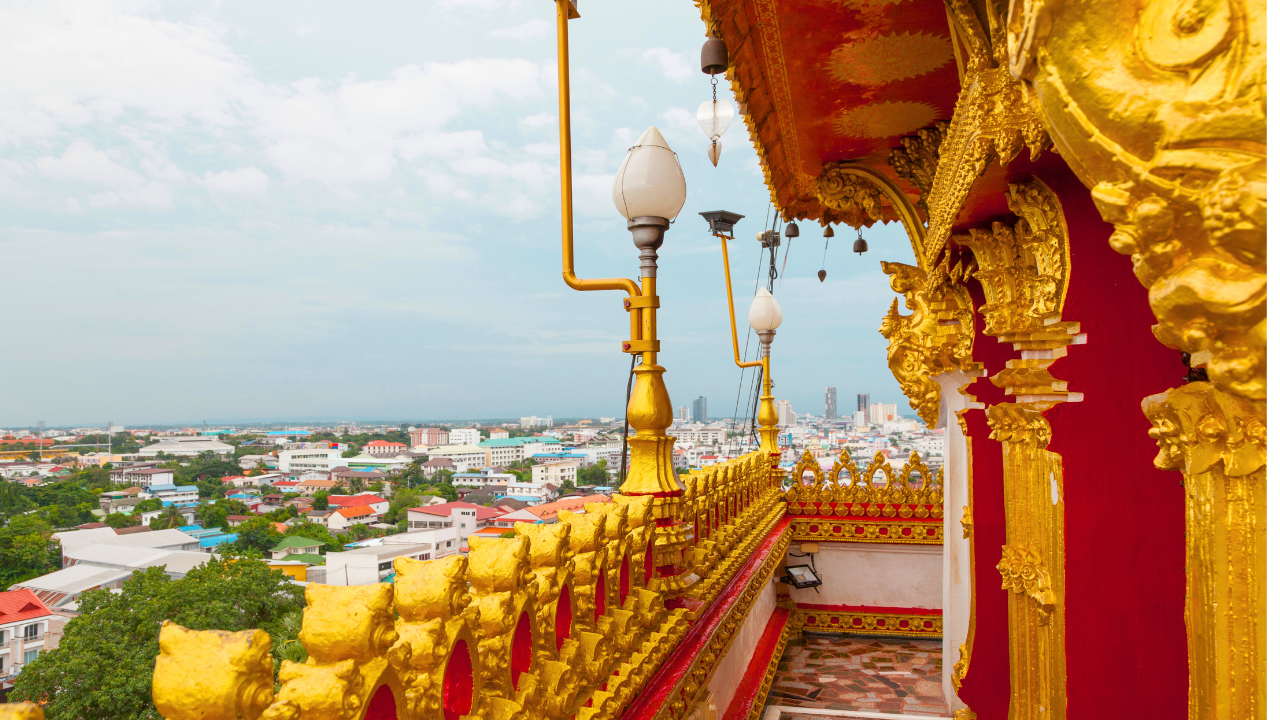
Khon Kaen is one of northeastern Thailand’s major cities, but it still feels grounded, friendly, and deeply Thai. It’s modern enough to have malls, big supermarkets, and good hospitals, but relaxed enough that you can slip into local life quickly. For retirees looking to stretch their budget and live somewhere authentic, Khon Kaen is a strong contender.
Weather & Climate
The climate is warm year-round, with a cooler, drier period between December and January and hotter months around March–May.
Cost of Living & Housing in Khon Kaen
This region offers some of the best value in Thailand. Housing is affordable, food is inexpensive, and daily life requires very little to feel comfortable.
Apartment: 6,000–10,000 THB ($170–$280 USD)
Modern condo: 10,000–16,000 THB ($280–$450 USD)
Detached house: 12,000–20,000 THB ($340–$560 USD)
Best Neighborhoods
Most expats live in or near the city center or around the university district.
City Centre: Markets, malls, restaurants, and easy access to everything.
Near Khon Kaen University: A lively, café-filled area popular with younger locals.
Northern suburbs: Quiet houses and gated communities.
Healthcare in Khon Kaen
Bangkok Hospital Khon Kaen
Khon Kaen Ram Hospital
Pros of Khon Kaen
Extremely affordable living
Authentic, non-touristy environment
Good hospitals
Clean, well-organized city
Cons of Khon Kaen
No beaches
Hot season can be intense
Udon Thani
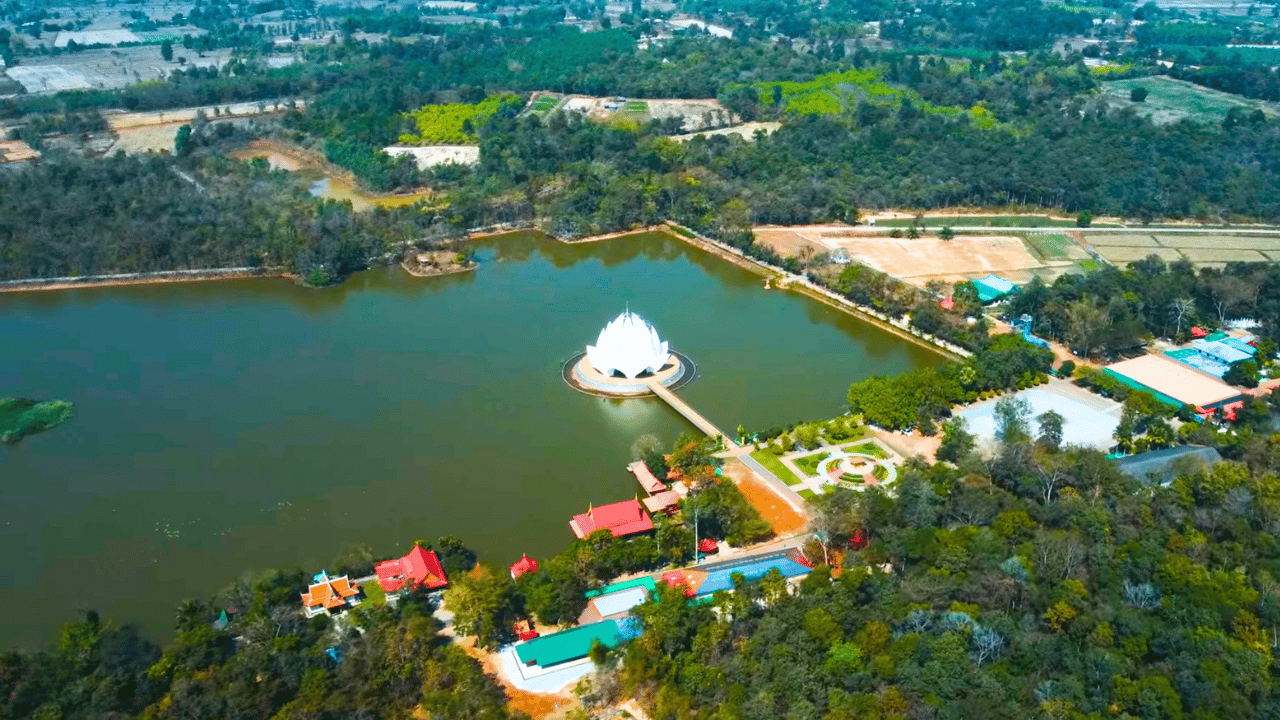
Udon Thani is another northeastern city beloved by long-stay expats and retirees. It’s affordable, friendly, and easy to navigate. The city has a well-established foreign community, making it easy to meet people and settle in quickly.
Udon is also known for its proximity to the beautiful Red Lotus Lake, a seasonal spectacle where fields of pink lilies stretch across the water.
Weather & Climate
Similar to other Isaan cities: warm and dry for much of the year, with pleasantly cool mornings in December and January.
Cost of Living & Housing in Udon Thani
Udon’s cost of living is among the lowest on this list, making it especially appealing for retirees living on fixed incomes.
Apartment: 5,000–9,000 THB ($140–$250 USD)
Modern condo: 10,000–15,000 THB ($280–$420 USD)
House rental: 12,000–18,000 THB ($340–$510 USD)
Best Neighborhoods
The city is compact, but a few areas stand out for comfort and livability.
City Centre: Shopping, markets, restaurants.
Nong Prajak Park: Green, scenic, and local—great for morning walks.
Suburban villages: Quiet house rentals and affordable living.
Healthcare in Udon Thani
Aek Udon Hospital
Bangkok Hospital Udon Thani
Pros of Udon Thani
Exceptionally affordable
Large retiree community
Strong private hospitals
Cons of Udon Thani
No beaches
Hot season can be strong
Lampang
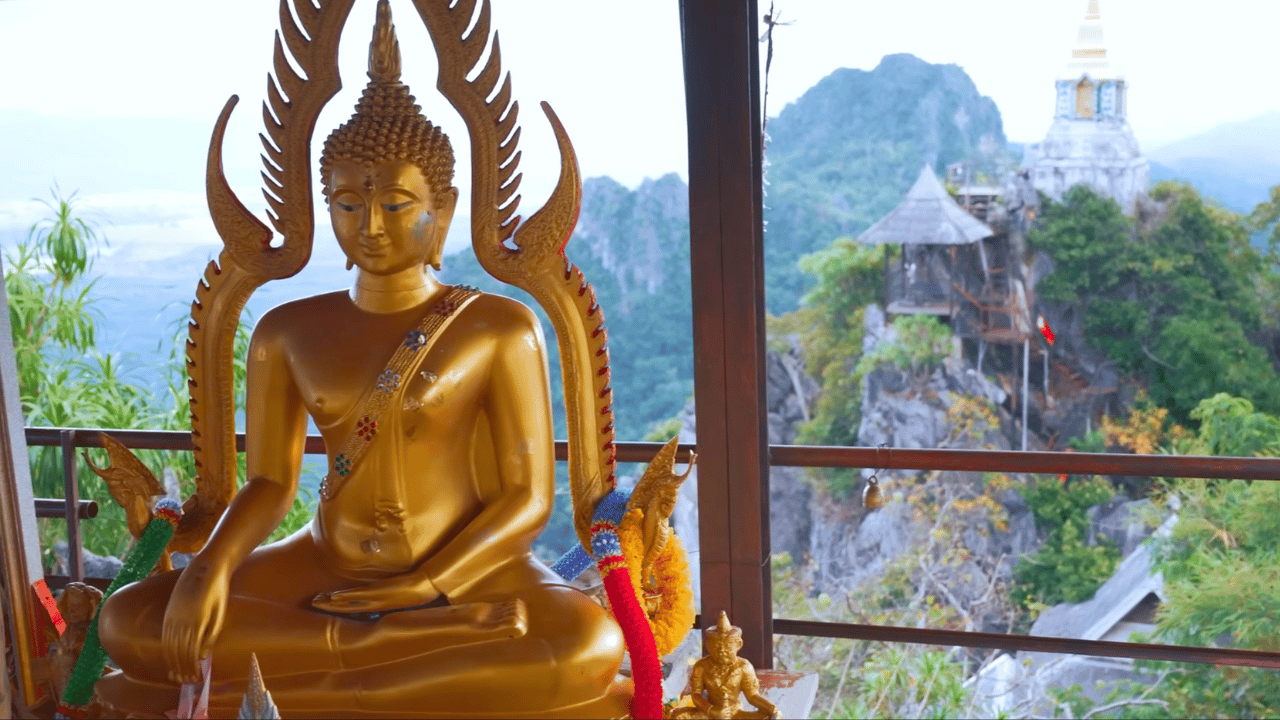
Lampang is one of northern Thailand’s more quietly charming cities—a place of old teak houses, temple-lined streets, and riverfront cafés. It’s slower and more traditional than Chiang Mai (but right next door to it), but with a similar northern warmth and an easy pace that many retirees find deeply appealing.
The city doesn’t attract as many tourists, which gives it a wonderfully local feeling. If you’re looking for authenticity, comfort, and very low costs, Lampang is well worth considering.
Weather & Climate
Lampang has warm days, but like Chiang Mai, evenings in the cool season can be refreshing. The hot months of March–April can be intense, but many retirees simply plan indoor afternoons during this period.
Cost of Living & Housing in Lampang
Simple apartment: 4,500–8,000 THB ($130–$220 USD)
Basic condo: 8,000–12,000 THB ($220–$340 USD)
House rental: 10,000–18,000 THB ($280–$510 USD)
Best Neighborhoods
Lampang’s neighborhoods are smaller and more compact than bigger cities, but still offer variety.
Old Town: Historic homes, cafés, and weekend markets.
Near Central Plaza: More modern conveniences.
Suburban areas: Quiet houses with space and gardens.
Healthcare in Lampang
Lampang Hospital (public)
Fah Thai Hospital
All the best hospitals of Chiang Mai, as it is within easy driving distance
Pros of Lampang
Extremely low cost of living
Quiet, authentic lifestyle
Historic architecture and northern charm
Cons of Lampang
Limited expat services
Inland city, so no beaches
Visas, Healthcare & Long-Term Logistics for Living or Retiring in Thailand
Once the lifestyle begins to appeal, the practical questions follow: How long can I stay? What kind of visa do I need? What about healthcare? Thailand remains one of Southeast Asia’s most retiree-friendly countries, but the rules matter—and understanding them helps you plan with confidence.
Retirement Visas
Thailand offers two primary visa categories for retirees, both aimed at people age 50 and above. They differ in requirements and flexibility, but both make long-term living possible.
Non-Immigrant O (Retirement): For those age 50+, typically renewed annually inside Thailand.
Non-Immigrant O-A (Long-Stay Retirement): One-year visa with requirements such as medical checks, background verification, and health insurance.
Common requirements include proof of monthly income, a security deposit in a Thai bank, or a combination of both. Insurance requirements vary by visa type.
Other Long-Stay Options
If you’re not retiring, or if you want alternatives, Thailand offers other visa paths:
Non-Immigrant B: For employment and business.
Dependent Visas: For spouses or family of visa holders.
DTV Visa (the Destination Thailand Visa): This is a popular visa for digital nomads and those taking what is called "soft power" courses, meaning eligible cooking classes, language classes, Muay Thai boxing, et cetera. You must show you have 50,000 baht ($14,000 US) in a bank account. (It can be in your home country; it is not required to be in a Thai bank like the retirement visas above). The fee is usually 10,000 Thai baht ($280 US), but some foreign Thai embassies charge a bit more. The visa is good for 5 years but you must depart Thailand every 180 days then you can return to start a new period. This visa is quite new so the "bugs" are still being worked out and new requirements seem to keep popping up. One disadvantage to the visa is at present Thailand is not accepting DTV visa holders as eligible to open a Thai bank account. (This is not required to live in Thailand but does make life much easier.) All the other visa types mentioned here are accepted to show residency and open a Thai bank account.
Thailand Privilege (previously known as the Elite Visa): A premium, long-term visa (5–20 years) based on membership fees with a lot of perks, such as short lines in the airport, golf cart travel within the airport, car pickup and drop off at many Thailand airports. The five-year Thailand Privilege visa is $650,000 baht ($19,000 US). This visa is for those who want the simplest, multi-entry, no-headache visa, and have the resources to pay for the convenience.
LTR Visa (Long Term Resident Visa): Has a ten year term, divided into five year periods. After the first five years you prove you still meet the requirements and then automatically get another five years. The cost is 50,000 Thai baht (about $1,500 US). It is not truly expensive when you divide the cost by ten, to get an actual annual cost ($150 a year). You will incur extra costs if you use a visa agent (advisable to increase the chances your application is just as the Thais want it, which can be evasive for a non-agent). It is very difficult to quality for, however. There are four categories, the most popular being the "wealthy pensioner" category. Complicating eligibility is that a person not just prove a high income, it must be passive income, such as retirement pension, rental income, et cetera, not a salary.
My daughter, Hailey Hicks, is the director of HH Premium Visa in Chiang Mai, and she handles both Thailand Privilege and LTR visas, whether you are in Thailand or are applying from your home country. She actually preceded me living in Chiang Mai by many years and I moved here due to visiting her then loving the country, as she does. She has a fully bilingual staff of four Thai ladies, like Hailey all very dedicated to what they do, and have one of the highest visa agency ratings in Thailand. For Thailand Privilege visas, there is no agent fee - their services are completely free - as Thailand Privilege directly pays the agency handling the application. For LTR visas, however, there is no such option. So there is a fee for their time and work as an agency. One nice thing about the LTR visa is you don't pay until you are approved. This has been true sometimes in the past for Thailand Privilege visas, but more recently Thailand Privilege has required a 50,000 baht deposit with the application.
Healthcare Quality & Costs
Healthcare is a major advantage of living or retiring in Thailand. Private hospitals are modern, efficient, and far more affordable than those in Western countries. Many expats pay out of pocket for routine care and carry insurance for more serious needs.
General doctor visit: 600–1,200 THB ($17–$34 USD)
Specialist consultation: 1,000–2,000 THB ($28–$56 USD)
MRI scan: 8,000–14,000 THB ($225–$395 USD)
Bangkok and Phuket offer the country’s highest level of specialist care, while Chiang Mai and Pattaya provide excellent regional options. Smaller cities have good basic hospitals, with larger centers only a short flight away if needed.
Daily Life Logistics
Daily life in Thailand is practical and simple: banking, mobile phone plans, utilities, internet, and rentals are straightforward to arrange. Supermarkets stock both local and imported goods, and delivery apps make shopping and dining especially easy. For retirees, the combination of comfort and affordability is often a decisive factor.
Where Should You Live?
Choosing the right place to live in Thailand depends on your rhythm: do you want ocean breezes or mountain mornings? A social community or quiet streets? Big-city convenience or small-town authenticity? Each region offers a different balance.
Bangkok: Best for modern urban living, world-class healthcare, and excellent transit.
Chiang Mai: Best for culture, temples, cafés, and milder cool-season weather in November and December.
Phuket: Best for beach life with strong infrastructure.
Pattaya: Best for retirees who want convenience, affordability, easy access to female "entertainment," and proximity to Bangkok.
Hua Hin: Best for peaceful seaside living, golf, and stable year-round community.
Koh Samui: Best for quiet, scenic island life.
Khon Kaen: Best for authentic Thai living at very low cost.
Udon Thani: Best for retirees seeking excellent value and a supportive expat community.
Lampang: Best for northern charm, history, and the lowest living costs.
Conclusion
Thailand offers something rare: a country where you can enjoy a comfortable, even elevated lifestyle on a modest budget—without giving up good healthcare, friendly communities, or modern conveniences. Whether your ideal day involves wandering temple grounds in Chiang Mai, relaxing on a quiet beach in Hua Hin, dining your way through Bangkok’s markets, or enjoying the sunrise from a villa in Phuket, Thailand gives you room to live the life you want.
For many people, the idea of retiring in Thailand begins as a dream and becomes a long-term reality. With its combination of affordability, beauty, warmth, and cultural richness, Thailand has a way of making life feel fuller and easier at the same time.
Wherever you land—mountains, islands, or city—you may find that Thailand doesn’t just give you a new address. It gives you a new rhythm, a new community, and a new sense of possibility.
Sources for This Article: Thailand
Royal Thai Ministry of Foreign Affairs — https://www.mfa.go.th/
Thai Immigration Bureau — https://www.immigration.go.th/
Ministry of Public Health, Thailand — https://www.moph.go.th/
National Statistical Office of Thailand — https://www.nso.go.th/
Tourism Authority of Thailand — https://www.tourismthailand.org/
World Bank – Thailand Country Data — https://data.worldbank.org/country/thailand